
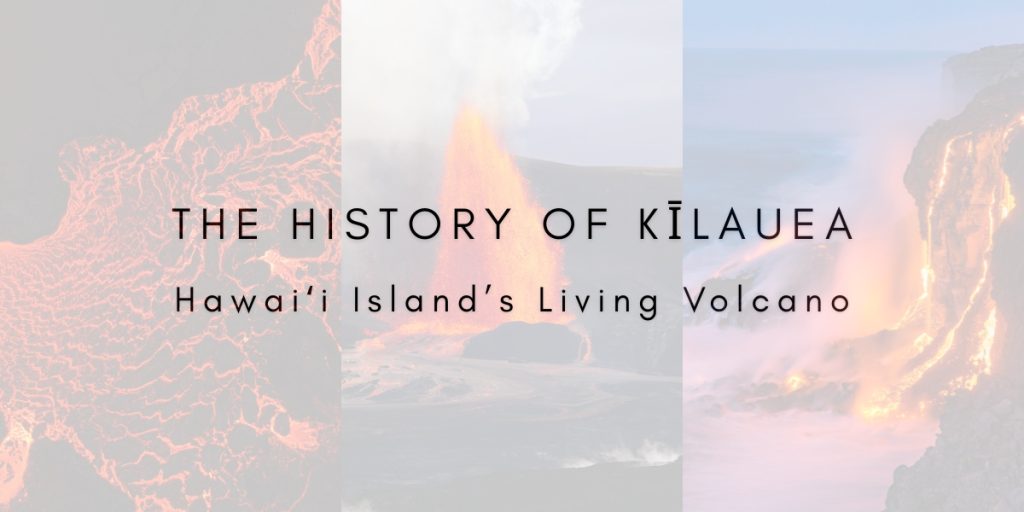
The History of Kīlauea: Hawaiʻi Island’s Living Volcano
Few places on earth remind us that the world is still being created quite like Kīlauea. Located within Hawaiʻi Volcanoes National Park on Hawaiʻi Island, Kīlauea is one of the most active volcanoes in the world and one of the most meaningful landscapes in Hawaiʻi. For many visitors, a trip to the park is more than a sightseeing stop. It is a chance to witness the powerful connection between land, culture, geology, and time.
A Volcano Still Shaping Hawaiʻi Island
Kīlauea is a shield volcano, a type of volcano known for its broad, gently sloping shape. Unlike the steep, cone-shaped volcanoes people often picture, shield volcanoes are built by repeated lava flows that spread across the land over long periods of time.
Kīlauea first began forming underwater hundreds of thousands of years ago. Over time, layer upon layer of lava helped build the volcano into the landscape we see today. Even now, Kīlauea continues to shape Hawaiʻi Island through eruptions, lava flows, steam vents, craters, and newly formed volcanic rock.
This is part of what makes Hawaiʻi Island so unique. The island is not only a beautiful destination — it is a living landscape.
The Cultural Significance of Kīlauea

Long before Kīlauea became a world-famous destination, it was and remains a deeply significant place in Hawaiian culture.Many Native Hawaiians traditionally view Kīlauea as the home of Pelehonuamea, often known as Pele, the Hawaiian deity of volcanoes and the creator of volcanic landscapes. Halemaʻumaʻu crater, located within Kīlauea’s summit caldera, is especially significant and is often associated with Pele.
Because of this, visitors are encouraged to approach Kīlauea with respect. Hawaiʻi Volcanoes National Park is not just a scenic attraction. It is a sacred cultural landscape, a place of stories, traditions, and ongoing Native Hawaiian connection.
When visiting, stay on marked trails, do not remove lava rock or natural materials, follow posted guidance, and take time to learn about the history and meaning of the place.

Pu‘uloa Petroglyphs
Puʻuloa, often translated as “long hill” or “hill of long life,” is a deeply meaningful cultural site for Native Hawaiians, especially for the people of Kalapana. Located in the ahupuaʻa of Pānau Nui on the southern slope of Kīlauea, Puʻuloa is best known for its expansive petroglyph field. Across the hardened lava, thousands of carved images tell stories of the people who lived, traveled, and honored this landscape. The site contains more than 23,000 petroglyphs, including cup-like depressions, circles, geometric markings, human figures, canoe sail designs, and other symbolic images.
Geologically, Puʻuloa sits within an area shaped by ancient lava flows. The central section includes a volcanic pressure dome, surrounded by broad pāhoehoe lava fields. Pāhoehoe is the smoother, ropier form of lava commonly found in Hawaiʻi, and the flows in this area are believed to date back to approximately AD 1200–1450.
Kīlauea and Hawaiʻi Volcanoes National Park
Hawaiʻi Volcanoes National Park was established to protect some of the most extraordinary volcanic and cultural landscapes in the world. The park stretches from sea level to the summit of Mauna Loa and includes rainforests, lava fields, craters, coastal cliffs, petroglyphs, steam vents, and some of the youngest land on earth.
For visitors staying on Hawaiʻi Island, the park offers a rare opportunity to experience geology in motion. Depending on current volcanic activity and weather conditions, guests may be able to view steam, volcanic glow, lava fountains, or freshly changed crater landscapes from safe, designated overlooks.
Because volcanic activity can change quickly, it is always best to check the official Hawaiʻi Volcanoes National Park and USGS Hawaiian Volcano Observatory updates before visiting.
The Puʻuʻōʻō Eruption: 1983–2018
One of Kīlauea’s most famous eruptions began in 1983 at Puʻuʻōʻō on the East Rift Zone. This eruption lasted for more than three decades, making it one of the longest rift zone eruptions in Kīlauea’s recorded history.
During this period, lava repeatedly reshaped parts of the island, created new land, covered roads, and changed communities. The eruption became an important reminder that on Hawaiʻi Island, the land is both beautiful and powerful.
The 2018 Eruption and Summit Collapse & Puna Region Disaster
In 2018, Kīlauea experienced one of its most dramatic modern events. Lava erupted in the lower East Rift Zone, impacting neighborhoods in Puna and destroying hundreds of structures. At the same time, major changes occurred at the summit, including the collapse of parts of the caldera.
The Video to your left was taken recently during a trip to Leilani Estates in Puna, where neighborhoods were completely destroyed. Imagine waking up to lava creeping toward your home, and having just minutes to save your family and belongings. This deeply affected the community, and still does to this day. At the end of the video, you can see the road that ran right through the neighborhood being cutoff by lava rock, showing the real scale of this destruction. The video below shows how this lava cut off travel through the area entirely, and the real magnitude and scale of Kilauea’s power.
If you do plan to visit Leilani Estates, do so by booking a tour led by Leilani Estates residents out of respect for those who lost their homes. Do not attempt to stroll onto the lava fields without guidance. It is highly disrespectful and dangerous.
The 2018 eruption was a major event for residents, scientists, and visitors alike. It changed the physical landscape of Kīlauea and brought renewed attention to the importance of volcano monitoring, preparedness, and respect for natural hazards.
Recent Summit Activity
In recent years, Kīlauea has continued to show activity within the summit region, including eruptions in and around Halemaʻumaʻu crater. These eruptions are closely monitored by the USGS Hawaiian Volcano Observatory and Hawaiʻi Volcanoes National Park.
For visitors, this means every trip to Kīlauea can feel different. Some days may offer dramatic volcanic glow or lava viewing opportunities. Other days may be quiet, misty, and still. Either way, the park offers a powerful look at the forces that continue to build Hawaiʻi.
Visiting Kīlauea Respectfully and Safely
Kīlauea is unforgettable, but it is also an active volcanic environment. Conditions can change quickly, and hazards may include volcanic gases, unstable cliff edges, cracks, steam vents, ash, and sharp lava rock.
Before heading to the park, visitors should:
Check current eruption and road conditions
Stay only in open, designated viewing areas
Bring layers, as the park can be cool and rainy
Carry water and wear sturdy shoes
Avoid cliff edges, cracks, and closed areas
Be mindful of vog, especially for those with respiratory sensitivities
Respect cultural sites and never remove rocks or natural materials
The safest and most meaningful visits happen when guests take the time to understand the landscape they are entering.
Why Kīlauea Matters
Kīlauea is more than a volcano. It is a place where visitors can see Hawaiʻi Island’s story still being written.
Its lava flows have shaped coastlines, forests, communities, and cultural traditions. Its eruptions have brought both destruction and creation. Its presence reminds us that Hawaiʻi is not frozen in the past — it is alive, changing, and deeply connected to the people who call it home.
The lava flow shown to the left has an eery resemblance to veins – reminding us that this powerful force of nature is indeed alive and feeds the growth of this unique landscape unlike anywhere else on earth. Hawaii was formed from the life given to it by this lava. It was here before us, and will continue to be here far after we are gone.
For guests staying on Hawaiʻi Island, a visit to Kīlauea and Hawaiʻi Volcanoes National Park is one of the most memorable ways to experience the island’s natural history, cultural depth, and extraordinary beauty.
Whether you visit for a few hours or spend a full day exploring, Kīlauea offers something rare: the chance to stand on land shaped by fire, time, and tradition. Don’t miss the chance to experience a once in a lifetime event. Kīlauea has been extremely active over the past few years – and if you do take a chance and book a stay in paradise, you might just get to witness one of the most remarkable acts of nature on earth.
Images From Volcano National Park


